There are some places you visit for the beaches, some for the food, and some for the history. Then there’s Sicily, where you get all three at once and more.
This island isn’t just Italy’s sunny southern cousin; it’s a living scrapbook of the Mediterranean. Greeks, Romans, Arabs, Normans, Spaniards – you name it, they’ve all been here, built something, planted something, and left a little piece of themselves behind. The result is an island that feels both ancient and alive, where a crumbling temple can sit a short drive from a bustling market, and where your gelato has as much history as your guidebook.
So, if you’ve ever wondered why Sicily feels so special, the answer is simple: its history has baked the island into what it is today. Let’s take a little time-travel tour.
The Greeks: Setting the Stage
The Greeks were some of the first to fall for Sicily (and who could blame them?). They arrived around the 8th century BC and built stunning cities like Syracuse and Agrigento.
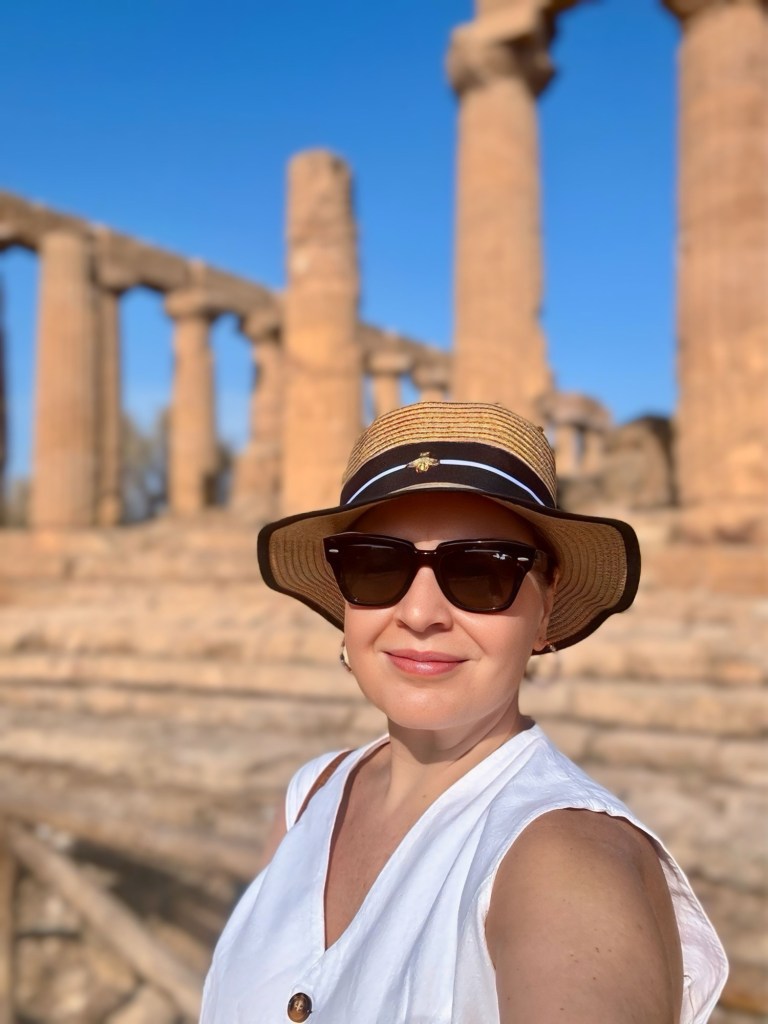
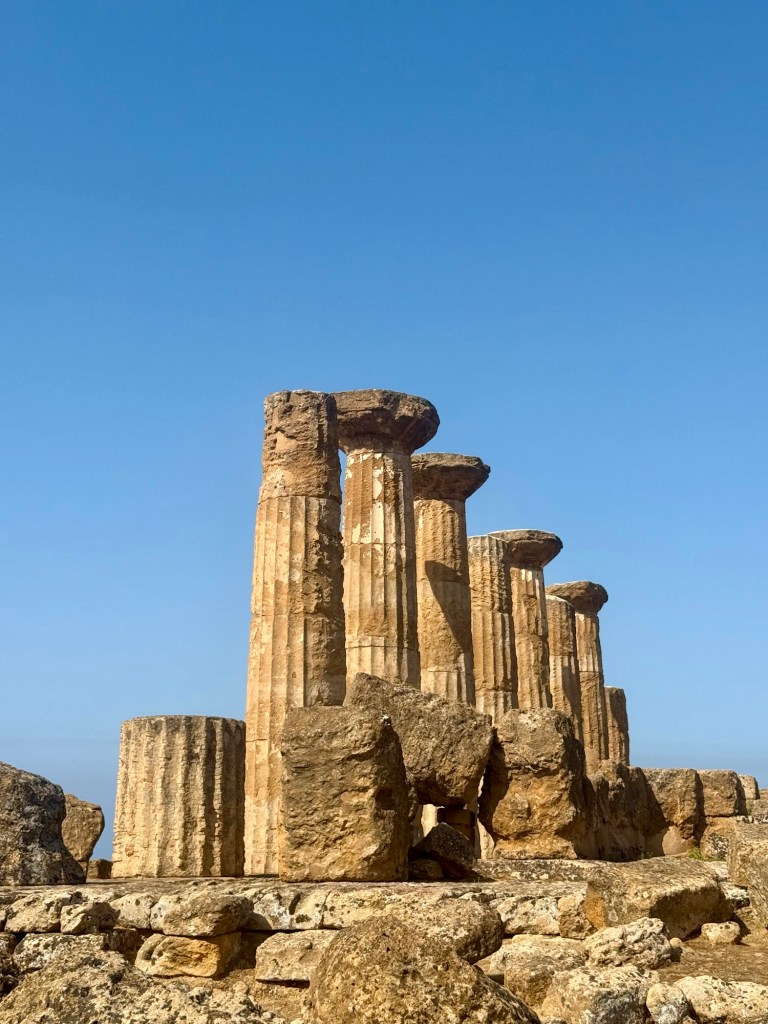
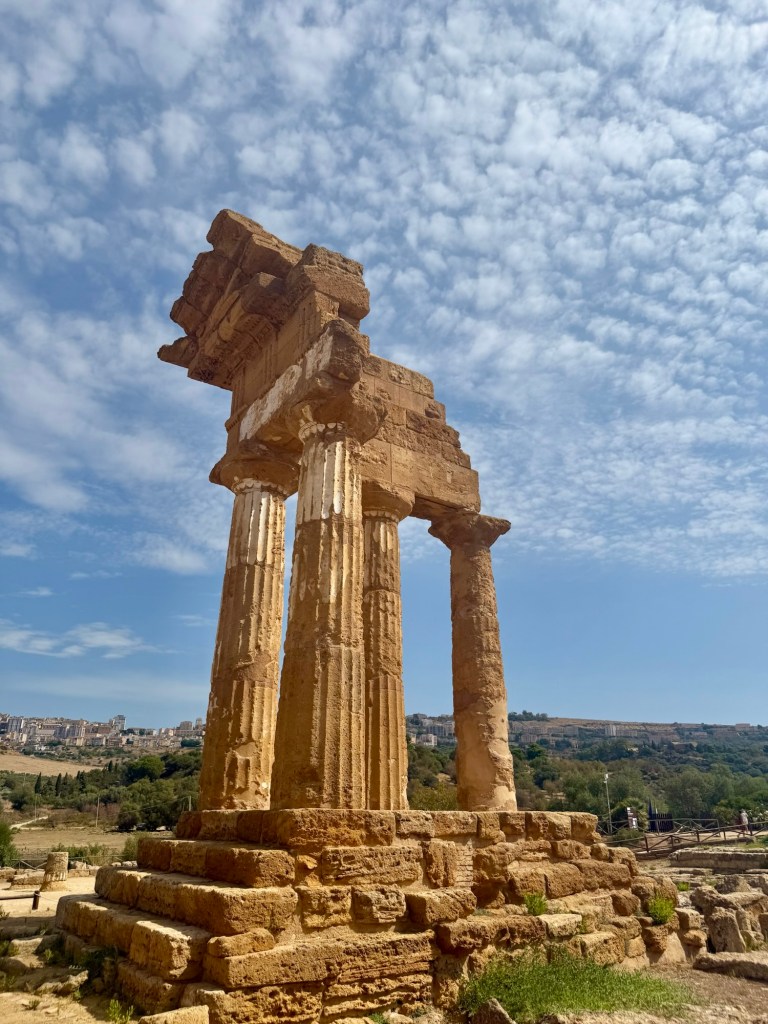
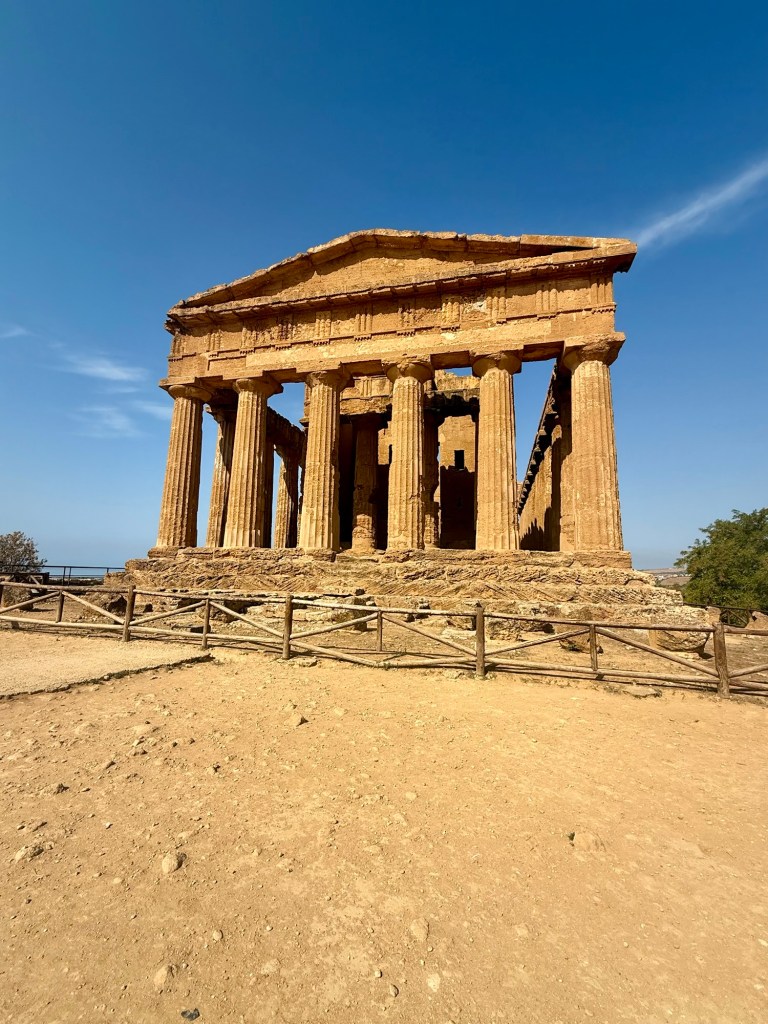
Their love of beauty left behind some of the island’s biggest icons: the Valley of the Temples, for example, where golden Doric columns rise against the sky like something out of a movie set. Even now, Sicilians are fiercely proud of their Greek heritage and it’s part of why the island feels like its own world, not just “southern Italy.”
The Romans: Feeding the Empire
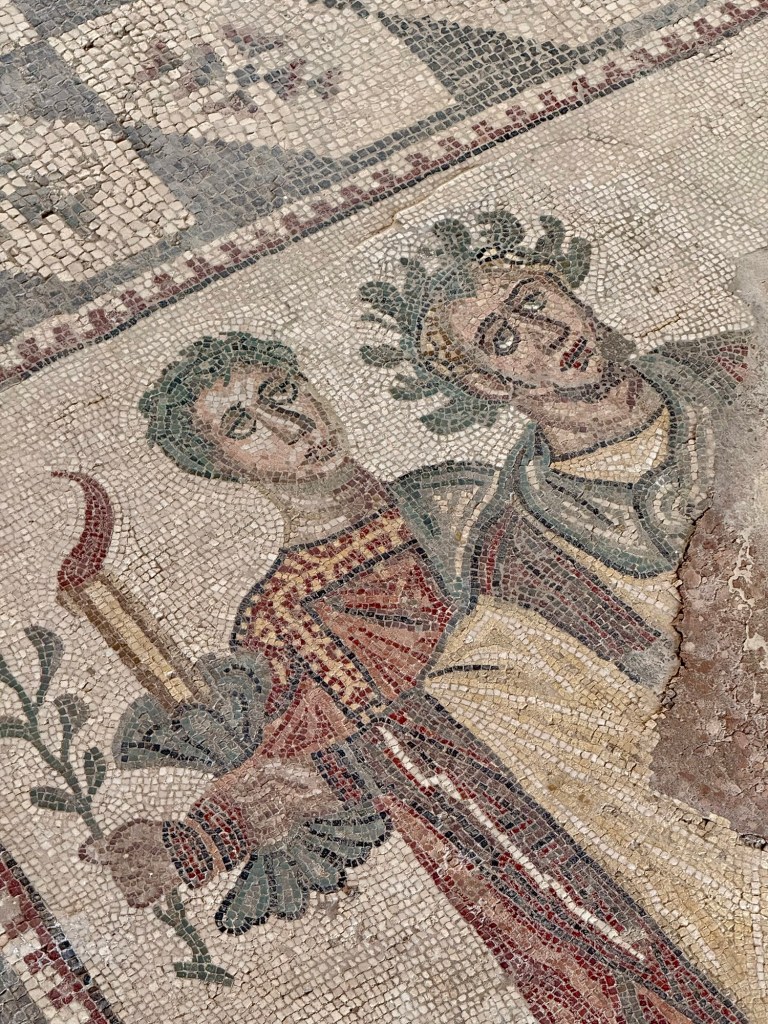
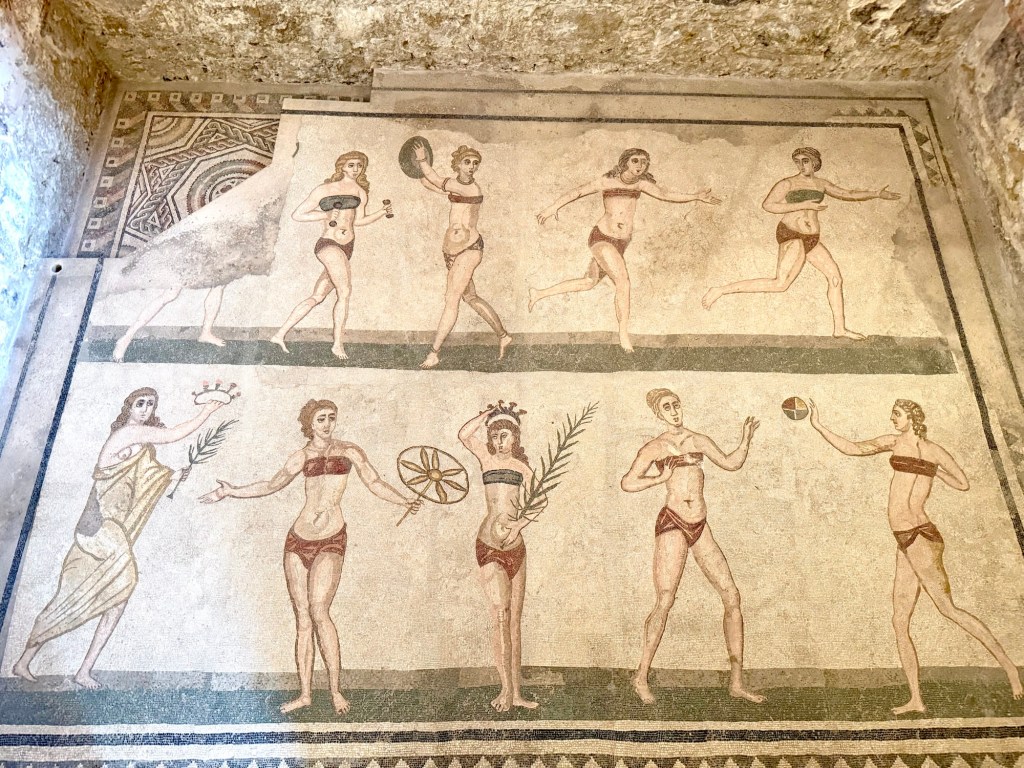
When Rome came calling in the 3rd century BC, Sicily became the empire’s first province. The island was basically Rome’s larder. Her fertile volcanic soil churned out enough wheat to keep the troops marching.
That legacy stuck. Sicily has always been about food in abundance. Dishes like pasta con le sarde (with wild fennel and sardines) feel like they could have been designed for hungry Roman soldiers. Even the road networks the Romans built helped shape modern Sicily, stitching its towns together.

The Arabs: Sweet Tooths and Citrus Dreams
If you’ve ever had Sicilian granita on a hot day, you can thank the Arabs. They arrived in the 9th century AD and brought sugar, citrus, pistachios, and rice with them. Cannoli, arancini, even that iconic squeeze of lemon over your seafood – none of it would exist without Arab influence.
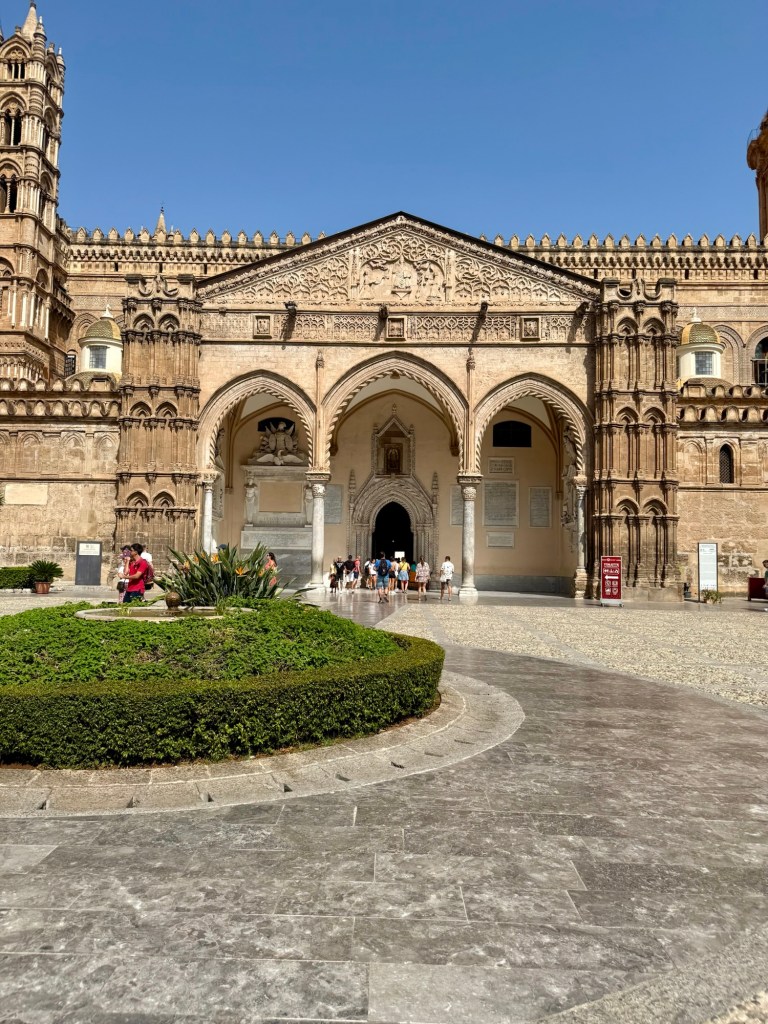
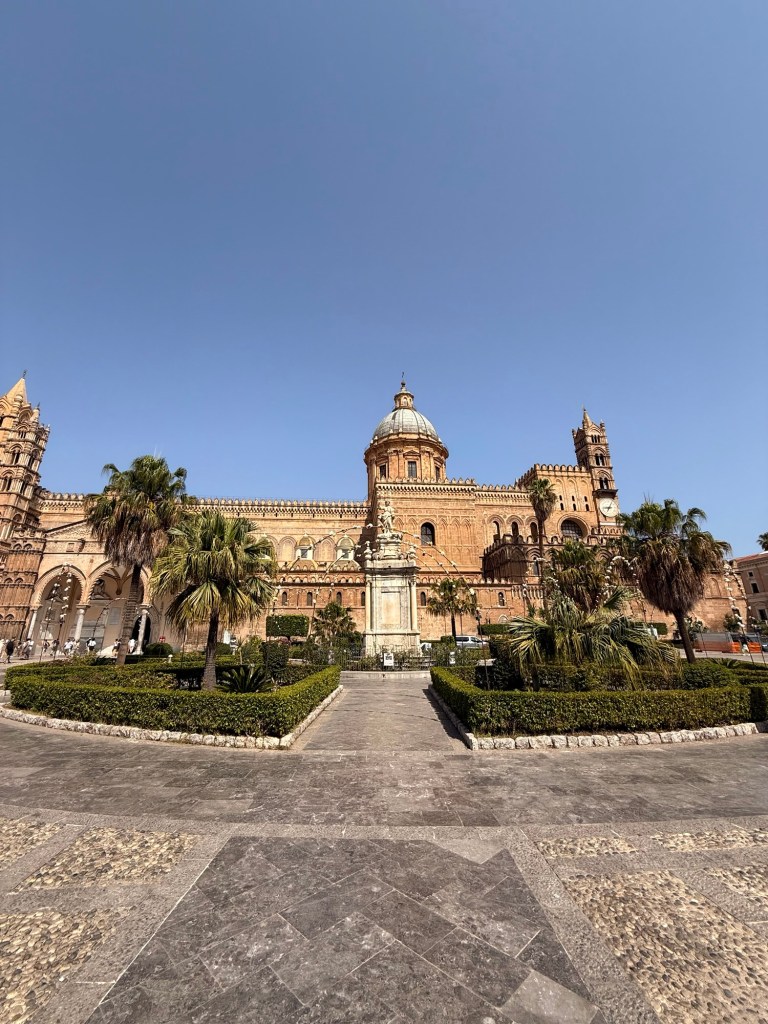
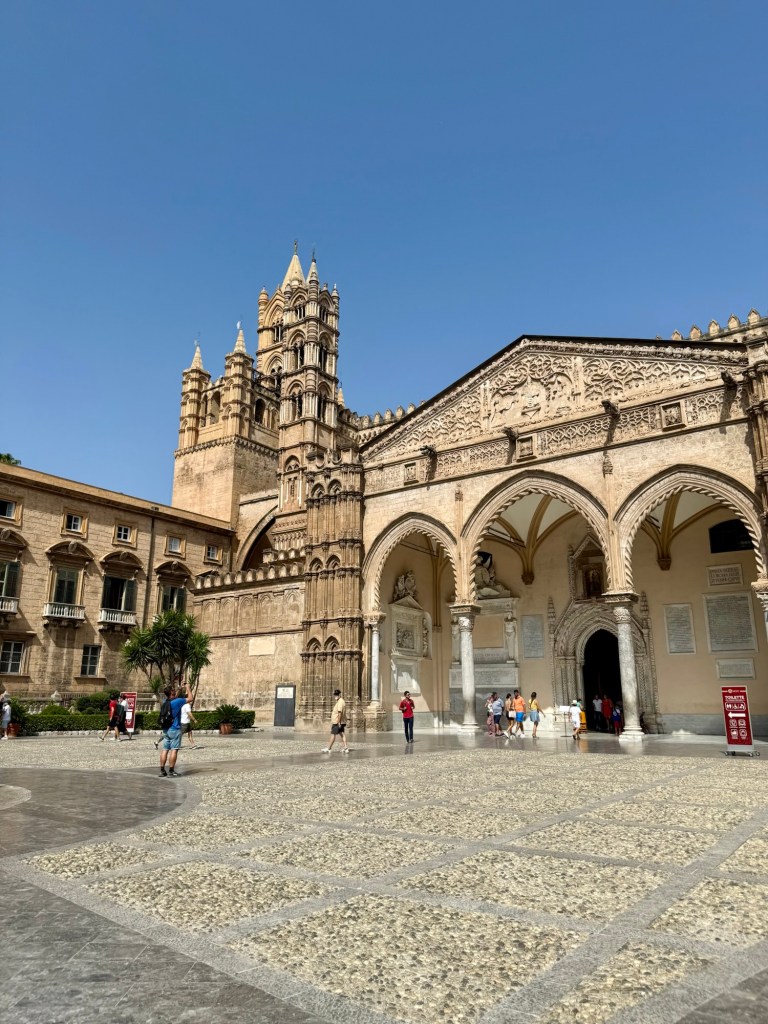
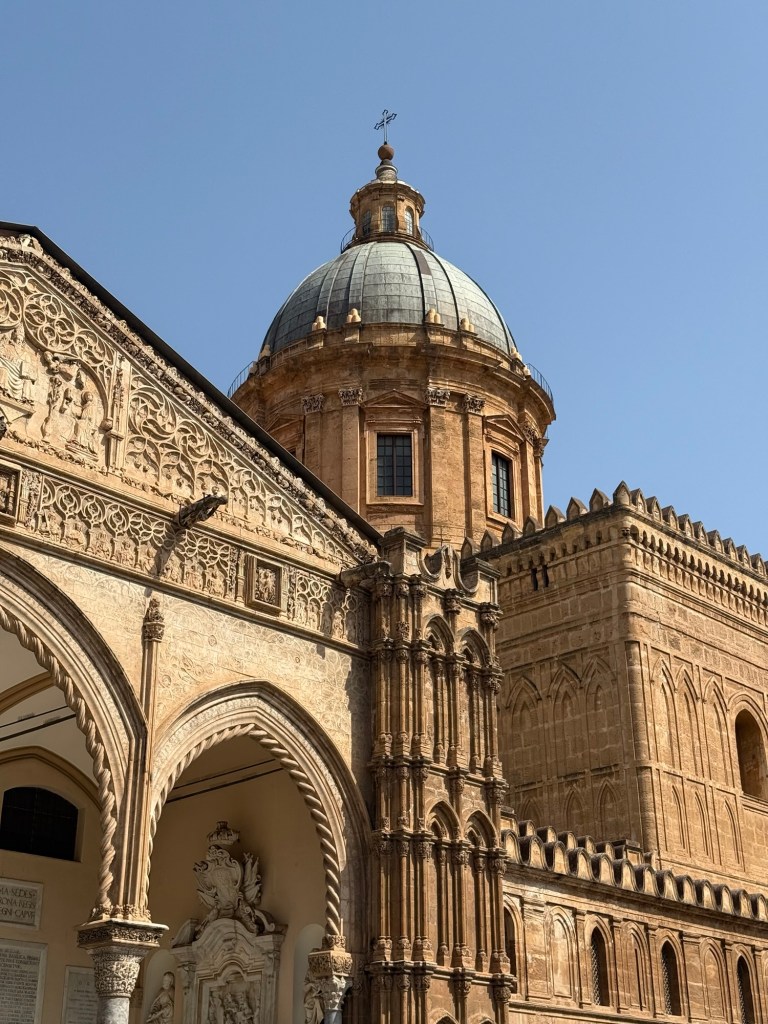
But it wasn’t just food. Under Arab rule, Palermo became one of the most vibrant cities in Europe, buzzing with scholars, artists, and merchants. Even today, you can spot Arabic arches and motifs in its palaces and churches.
The Normans: Blending Cultures in Gold
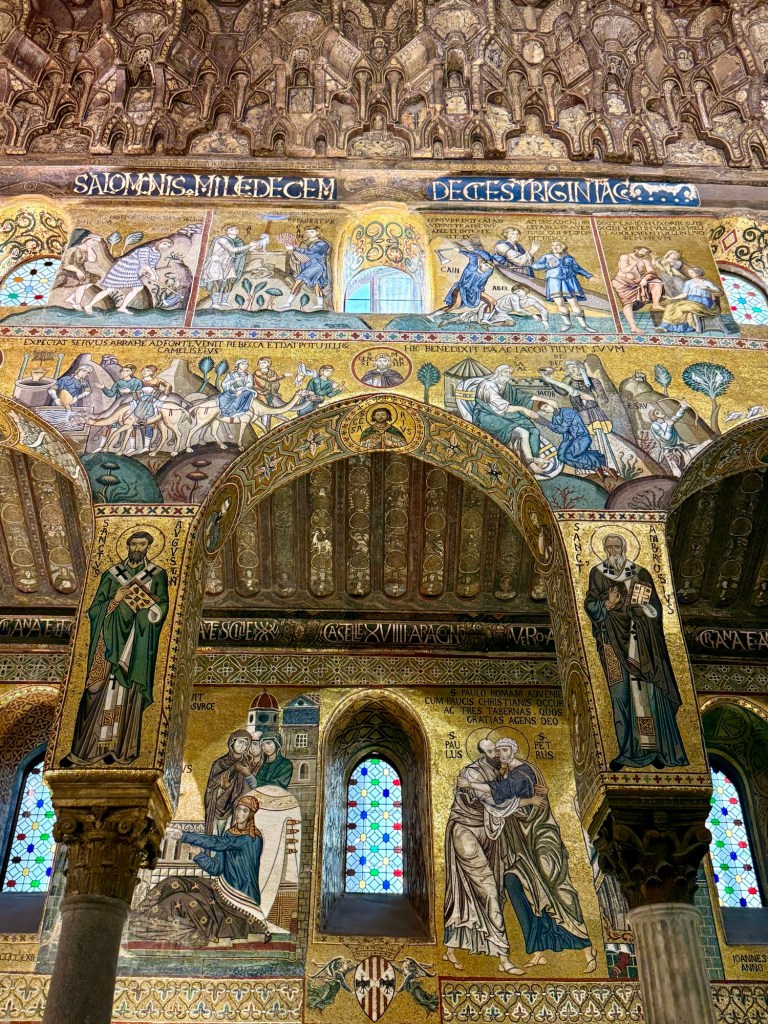
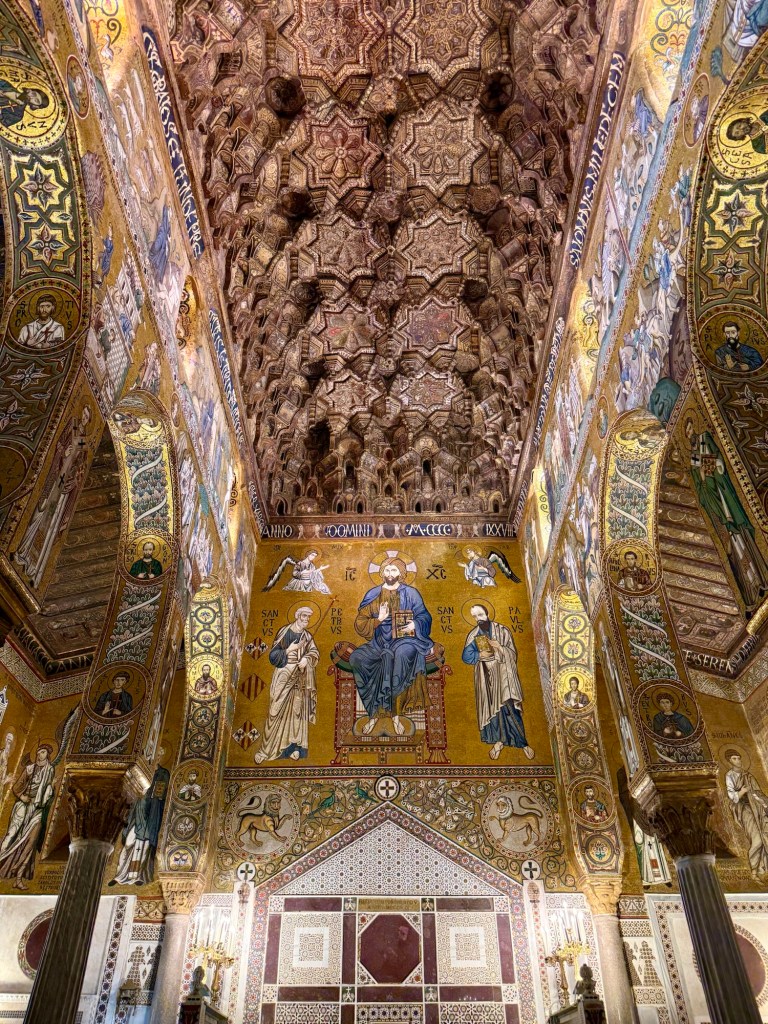
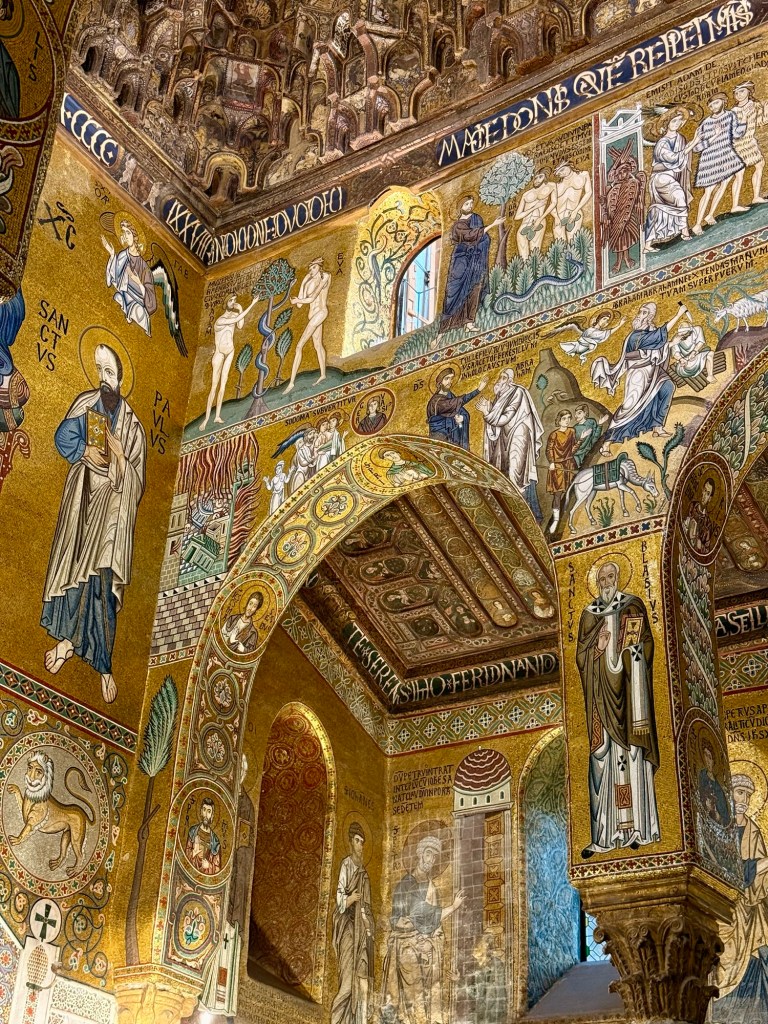
Next up: the Normans, who stormed in during the 11th century AD. Picture Viking-descended knights ruling an island full of Arab artisans and Byzantine mosaic-makers. The result? Magical.
If you only see one thing in Palermo, make it the Palatine Chapel. It’s part church, part mosque, part palace – all wrapped in golden mosaics that shimmer like they were installed yesterday. The Normans’ willingness to blend cultures gave Sicily a reputation as a true crossroads of civilizations.
The Spanish: Drama and Baroque Beauty
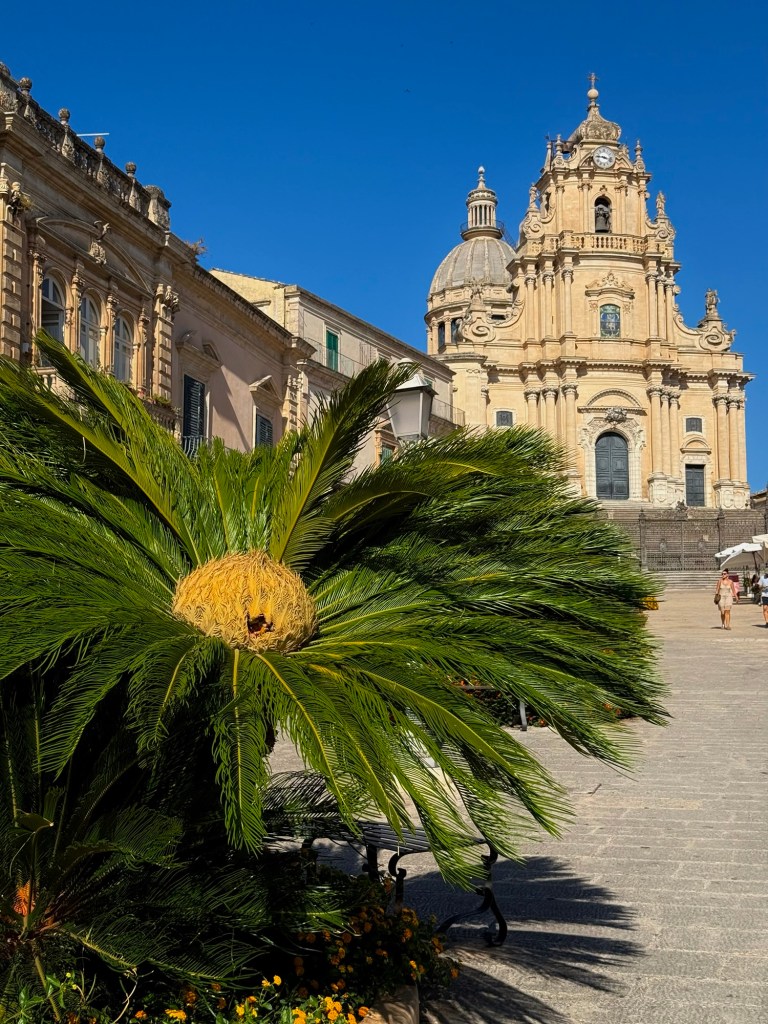
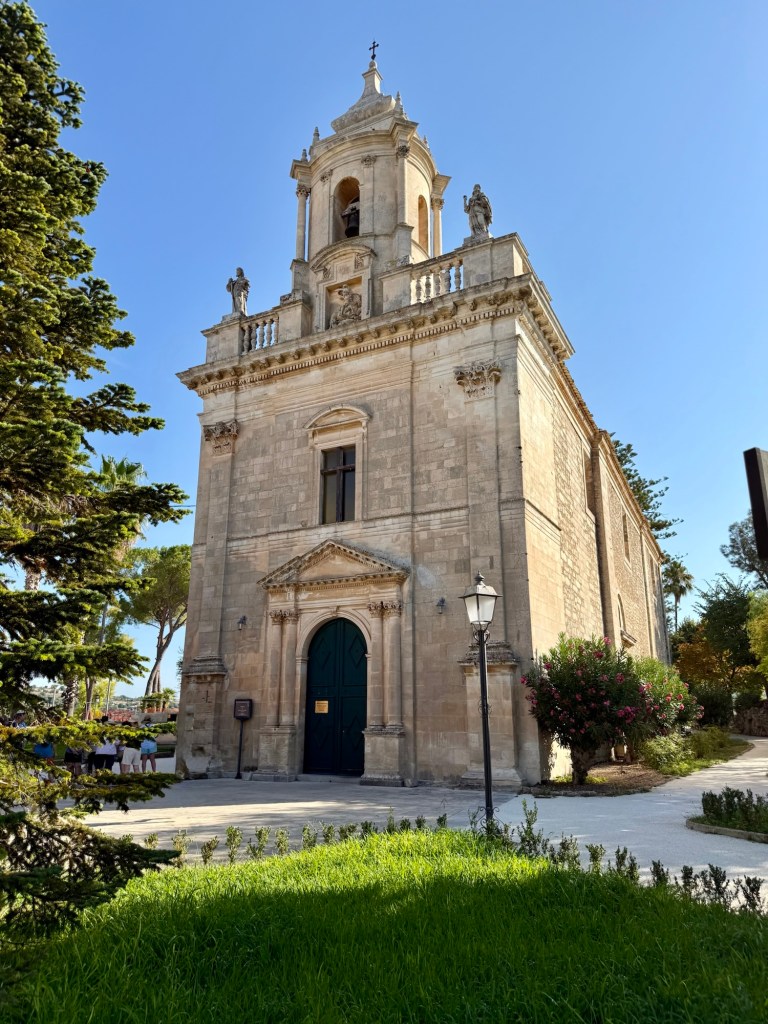
By the 15th century, Sicily was under Spanish control. It wasn’t the easiest period (hello, heavy taxes), but the Spanish did leave behind a spectacular gift: Baroque architecture.
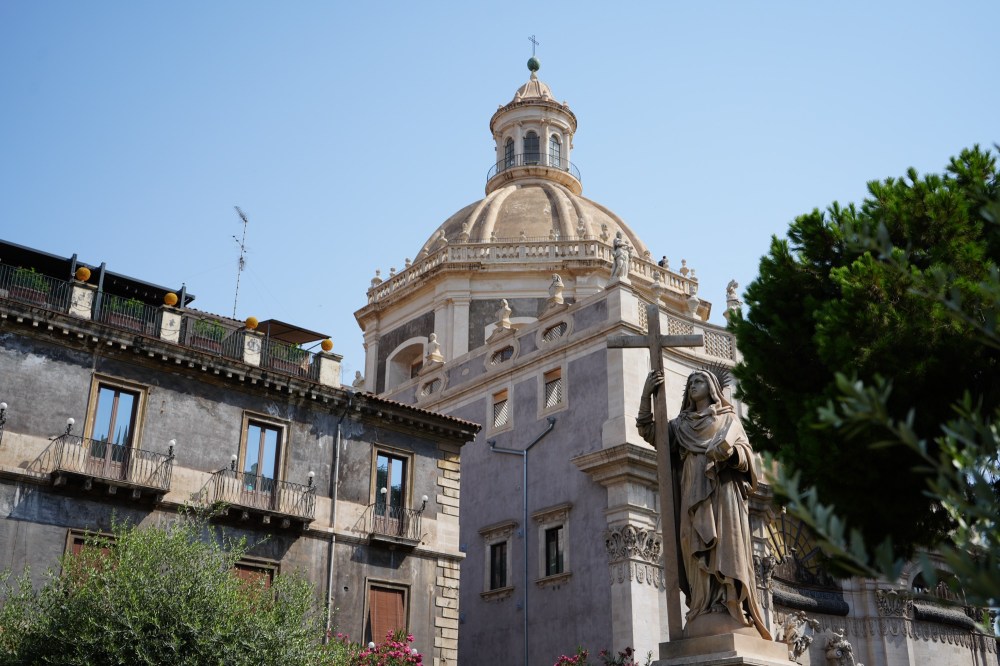
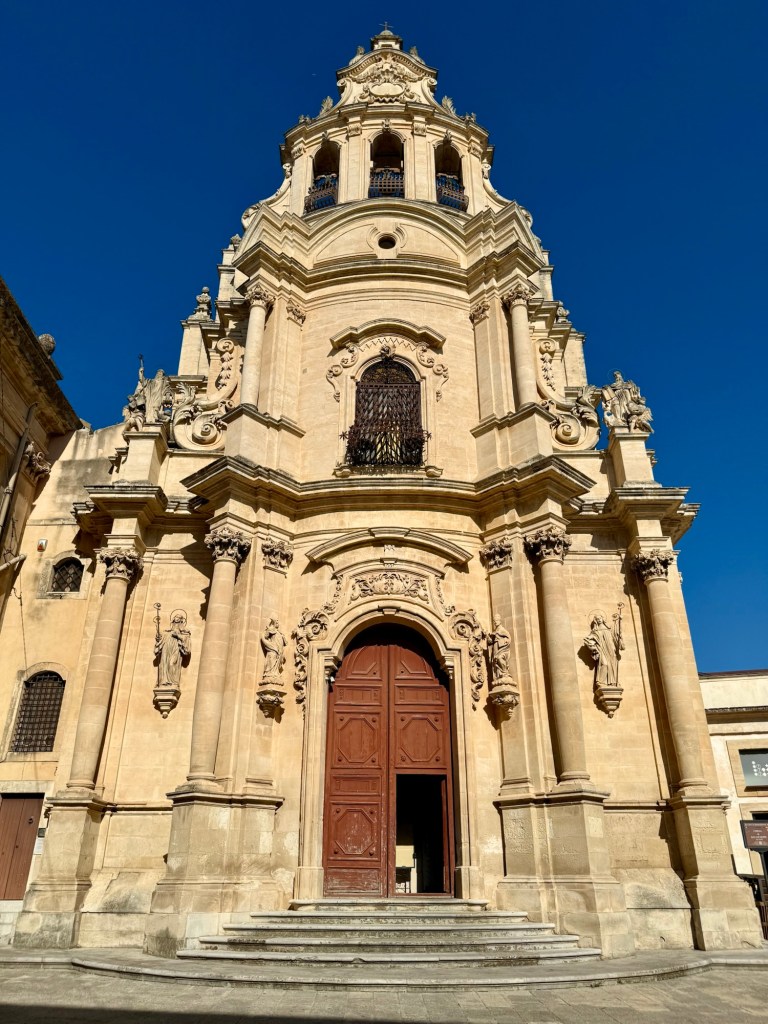
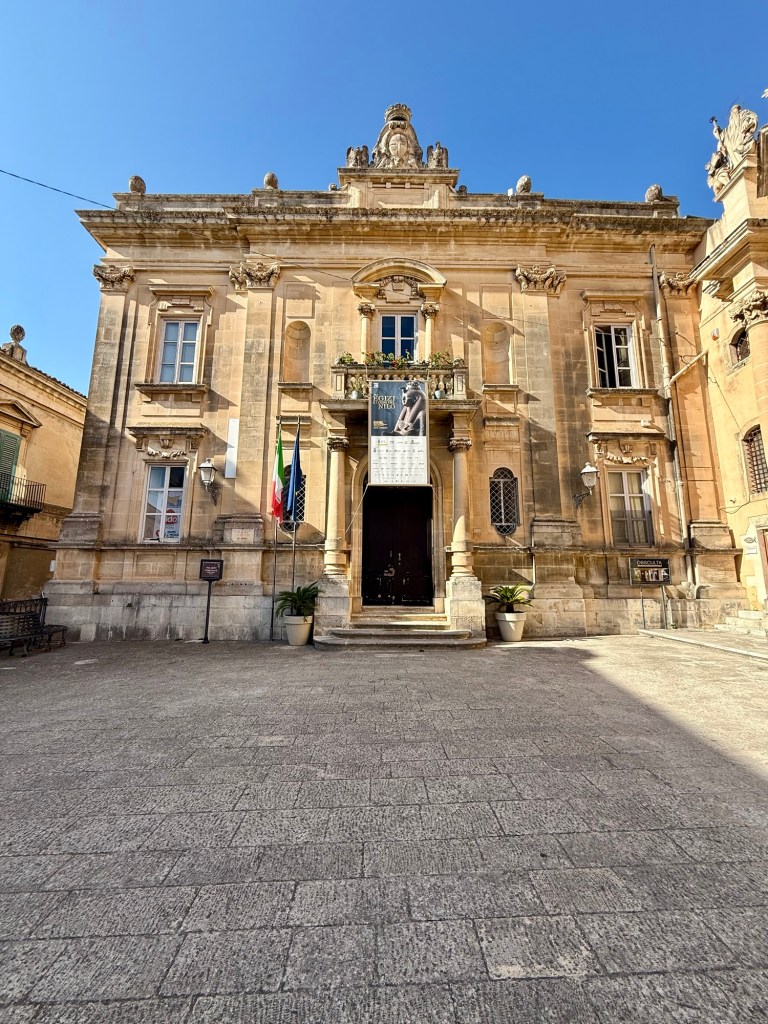
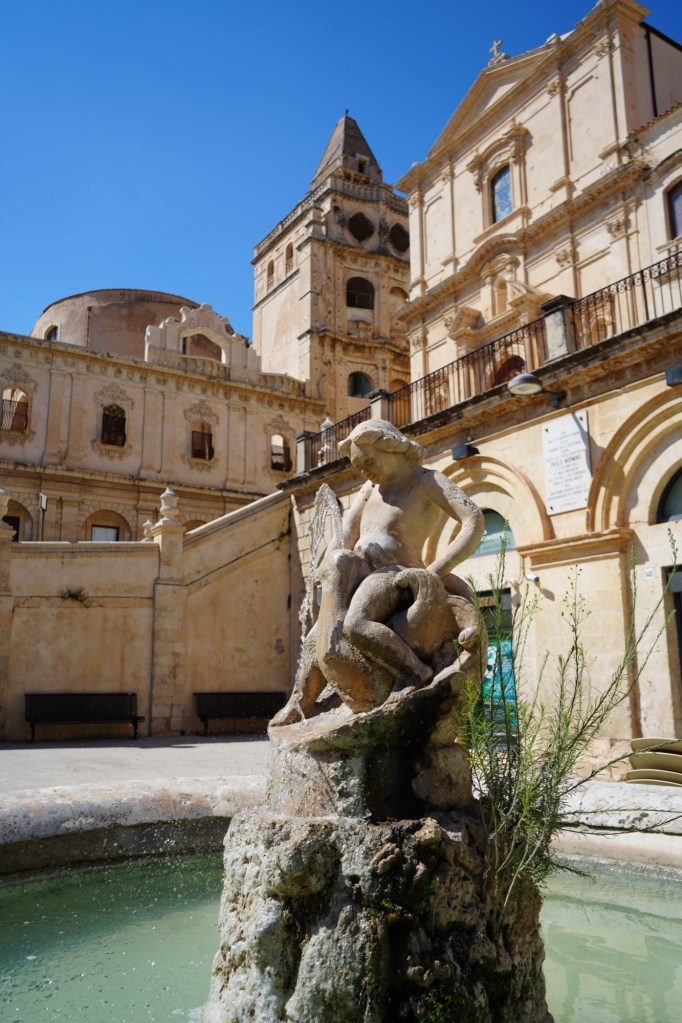
After a massive earthquake in 1693, towns like Noto and Ragusa were rebuilt with dramatic flair – balconies spilling with wrought iron, curving facades, sweeping staircases. Walking through them today feels like stepping onto a film set. And if you happen to visit during a festival, you’ll see the Spanish legacy in Sicily’s love of processions, fireworks and feasts.





Today: The Best of Everything
By the 19th century, Sicily was folded into modern Italy – but the island never lost its patchwork identity. Instead, it leaned into it.
You can taste 3,000 years of history in a single meal:
• Arancini: Arab rice meets Spanish frying.
• Cannoli: sugar from the Arabs, indulgence perfected by locals.
• Seafood pasta: a nod to the Greeks.
• Pasta alla Norma: local produce (aubergines) with Roman soul.
You can also walk through history. See a Greek play in an ancient theatre in Syracuse, climb a Norman tower in Palermo, then wander down a Spanish-built piazza in Catania – all in the same weekend. Even Sicilian dialects carry the island’s history, with words borrowed from Arabic, Greek, French and Spanish.
Why It Matters
Sicily’s magic isn’t just in its scenery or food – it’s in the way history lives here. Every conqueror, every culture, every new wave of people added something to the mix, and instead of erasing what came before, Sicily stacked it all together.
That’s why the island feels special and memorable.
You’re not just viewing ruins or eating pasta, you’re living through thousands of years of survival, creativity and cultural mixing.
Sicily is messy. She is layered. She is rich and dramatic and impossible to pin down. And that’s exactly why people fall in love with her. That’s why I fell in love with her!
Happy travels xoxo
 Dani ♥ Hearts